




Kate Middleton Wedding Dress: A Timeless Symbol of Royal Elegance
The wedding of Kate Middleton and Prince William on April 29, 2011, was one of the most celebrated global events of the 21st century. Watched by millions around the world, every detail of the ceremony captured public attention, but nothing stood out more than the breathtaking wedding dress worn by the future Princess of Wales. Elegant, refined, and deeply symbolic, the Kate Middleton wedding dress instantly became one of the most iconic bridal gowns in modern history.
Quick Bio
| Detail | Information |
|---|---|
| Full Name | Catherine Elizabeth Middleton |
| Title | Princess of Wales |
| Date of Birth | January 9, 1982 |
| Spouse | Prince William |
| Wedding Date | April 29, 2011 |
| Wedding Location | Westminster Abbey, London |
| Dress Designer | Sarah Burton |
| Fashion House | Alexander McQueen |
The Designer Behind the Masterpiece
The stunning gown was designed by Sarah Burton, the creative director of Alexander McQueen. The choice of Burton was both surprising and fitting. Known for blending modern aesthetics with traditional craftsmanship, Burton created a design that perfectly reflected Kate’s personality—graceful, understated, and timeless.
The secrecy surrounding the designer added to the anticipation. The identity of the designer was kept hidden until Kate stepped out of her car at Westminster Abbey, instantly capturing the world’s attention. The reveal was met with widespread admiration from fashion critics and the public alike.
Design and Silhouette
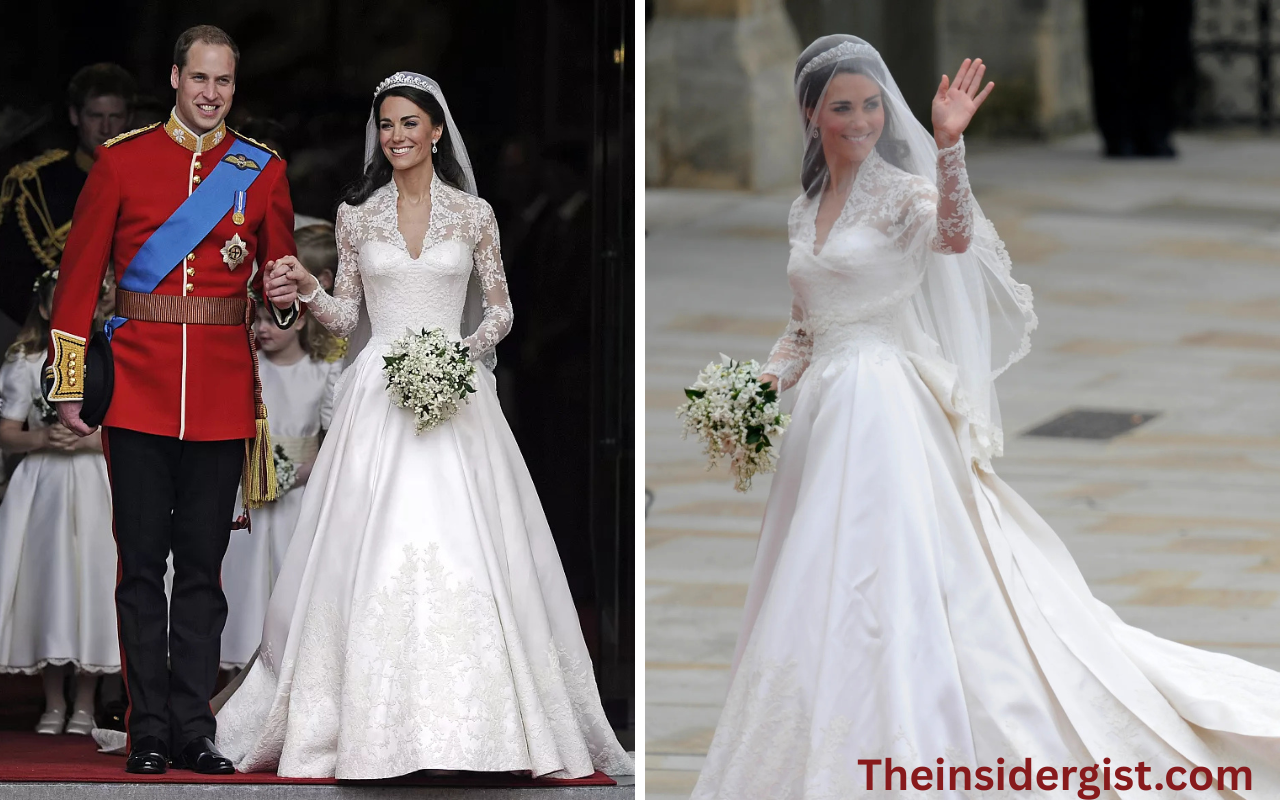
The Kate Middleton wedding dress featured a classic A-line silhouette that balanced structure with softness. The bodice was fitted, highlighting the waist, while the skirt flowed elegantly into a long, sweeping train measuring nearly nine feet. This combination created a regal yet approachable look that suited both the grandeur of a royal wedding and Kate’s personal style.
The neckline was modest yet sophisticated, with a deep V shape framed by delicate lace. The long sleeves were one of the most defining elements of the dress, marking a shift away from the strapless styles that had dominated bridal fashion for years. This choice helped set a new trend in the wedding industry, bringing modest elegance back into the spotlight.
Fabric and Materials
The gown was crafted using a combination of ivory and white satin gazar, providing structure to the skirt while maintaining a soft, luxurious appearance. The lace overlay was made from handmade Carrickmacross lace, a traditional technique that involves intricate detailing and precision.
The bodice and skirt were adorned with lace appliqué that was carefully hand-cut and stitched onto silk tulle. Each piece of lace was individually placed to ensure symmetry and artistic balance. The craftsmanship was so meticulous that the team working on the dress followed strict hygiene protocols, including washing their hands regularly to preserve the delicate materials.
Symbolism in the Lace
One of the most fascinating aspects of the Kate Middleton wedding dress was the symbolism embedded in its design. The lace featured floral emblems representing the four countries of the United Kingdom. The rose symbolized England, the thistle represented Scotland, the daffodil stood for Wales, and the shamrock represented Ireland.
These elements were not just decorative but deeply meaningful, reflecting unity and national pride. The inclusion of these symbols demonstrated the thoughtfulness behind the design and reinforced the significance of the royal wedding.
The Iconic Train and Veil
The train of the dress extended nearly nine feet behind Kate, striking a balance between tradition and practicality. Unlike some royal wedding trains that span several meters, Kate’s train was elegant without being overwhelming. It allowed for ease of movement while still maintaining a dramatic presence.
The veil, made of soft silk tulle, was another highlight of the ensemble. It was delicately embroidered with lace flowers that matched the motifs on the dress. The veil was held in place by the Cartier Halo Tiara, a piece loaned to Kate by Queen Elizabeth II. This tiara added a touch of royal heritage and completed the bridal look with understated brilliance.
Accessories and Styling
Kate’s approach to accessories was minimal yet meaningful. She wore custom-made diamond earrings gifted by her parents, which complemented the tiara without overpowering the look. Her makeup was natural and fresh, emphasizing her features while maintaining a classic bridal appearance.
A charming detail often mentioned is the “something blue” tradition. A small blue ribbon was sewn into the inner lining of the dress, adding a personal and sentimental touch to the gown.
The Cost and Value
The estimated cost of the Kate Middleton wedding dress was around $400,000 to $500,000 at the time. While this figure reflects the luxury and craftsmanship involved, the true value of the dress lies in its cultural impact. It quickly became one of the most recognized wedding dresses in history and remains a benchmark for bridal fashion.
Interestingly, the dress was paid for by Kate’s family, which aligns with traditional wedding customs. After the wedding, the gown was displayed at Buckingham Palace, attracting thousands of visitors eager to see it up close.
Global Influence on Bridal Fashion
The influence of the Kate Middleton wedding dress on global bridal trends cannot be overstated. Following the royal wedding, there was a noticeable surge in demand for long-sleeved wedding gowns, lace detailing, and modest silhouettes.
Designers around the world began incorporating similar elements into their collections. Brides sought dresses that combined elegance with tradition, moving away from more revealing styles. The “Kate effect” became a widely recognized phenomenon in the fashion industry, demonstrating her influence beyond the royal sphere.
A Second Wedding Dress
For the evening reception, Kate changed into a second gown, also designed by Sarah Burton. This dress featured a simpler silhouette with a satin finish and a soft shrug. While less formal than the main wedding gown, it maintained the same level of elegance and sophistication.
This second look allowed Kate to transition seamlessly from the formal ceremony to a more relaxed celebration, showcasing her versatility and style.
Why the Dress Remains Iconic
More than a decade later, the Kate Middleton wedding dress continues to inspire brides and designers alike. Its timeless design, attention to detail, and meaningful symbolism ensure its place in fashion history. Unlike many trend-driven gowns, Kate’s dress has an enduring appeal that transcends time.
The combination of tradition and modernity is perhaps the key to its lasting popularity. It honored royal customs while introducing a fresh perspective on bridal fashion. This balance made it relatable to modern brides while still maintaining its regal charm.
Read More: Eagles Quarterback Trade Rumors: What’s Real, What’s Speculation, and What Comes Next
Conclusion
The Kate Middleton wedding dress is more than just a piece of clothing; it is a symbol of elegance, tradition, and cultural significance. From its intricate lacework to its thoughtful design elements, every aspect of the gown reflects a deep level of craftsmanship and meaning. It set new standards in bridal fashion and continues to influence trends around the world.
For readers and fashion enthusiasts exploring iconic bridal styles, the story of this gown remains a source of inspiration. At theinsidergist, we continue to highlight such timeless fashion moments that leave a lasting impression on global style and culture.