



The Hawkins Lab Horror No One Saw Coming: Leah Palmirotto’s Tragic End
When fans of Stranger Things type the name Leah Palmirotto into their search bars, they expect to find an actress or a character from the hit Netflix series. The truth is far more tragic and jarring than any fictional plot involving the Upside Down or Vecna. Leah Palmirotto was not part of the cast of Stranger Things Season five or any previous season. She was a nineteen year old photography enthusiast with a burning passion for exploring abandoned buildings and capturing their haunting beauty through her camera lens. Her story took a devastating turn in December two thousand twenty five when she visited a location that millions of viewers instantly recognize as Hawkins National Laboratory.
The confusion between Leah Palmirotto and Stranger Things arises entirely from the place where she lost her life. That place is the real abandoned building on the Briarcliff campus of Emory University in Decatur, Georgia. For years, this decaying structure served as the exterior and interior filming site for the sinister lab where Eleven was held and experimented on. It is the same building where the gate to the Upside Down was torn open. Because the show enjoys a massive global following, this location has become an unintentional pilgrimage site for fans. Leah went there not as a trespasser with bad intentions, but as an artist drawn to the eerie beauty of a place made famous by television. Her visit ended in a fatal fall, turning a fictional horror backdrop into a scene of genuine, irreversible loss.
In the weeks following the incident, online speculation ran wild. Social media users began spreading false claims that Leah had played a minor role in the final season or that her death was somehow related to the show’s plot. None of that is true. The reality is painfully simple and deeply sad. A young woman with a bright future entered a restricted area that was never designed to be safe for public access. She fell from a significant height and later died from her injuries. Her family, including her father Todd Palmirotto, has been left to pick up the pieces of a shattered life. This article exists to honor Leah’s memory by telling the accurate, researched, and respectful story of what really happened and why every Stranger Things fan should know about it.
A Vibrant Young Life Cut Devastatingly Short
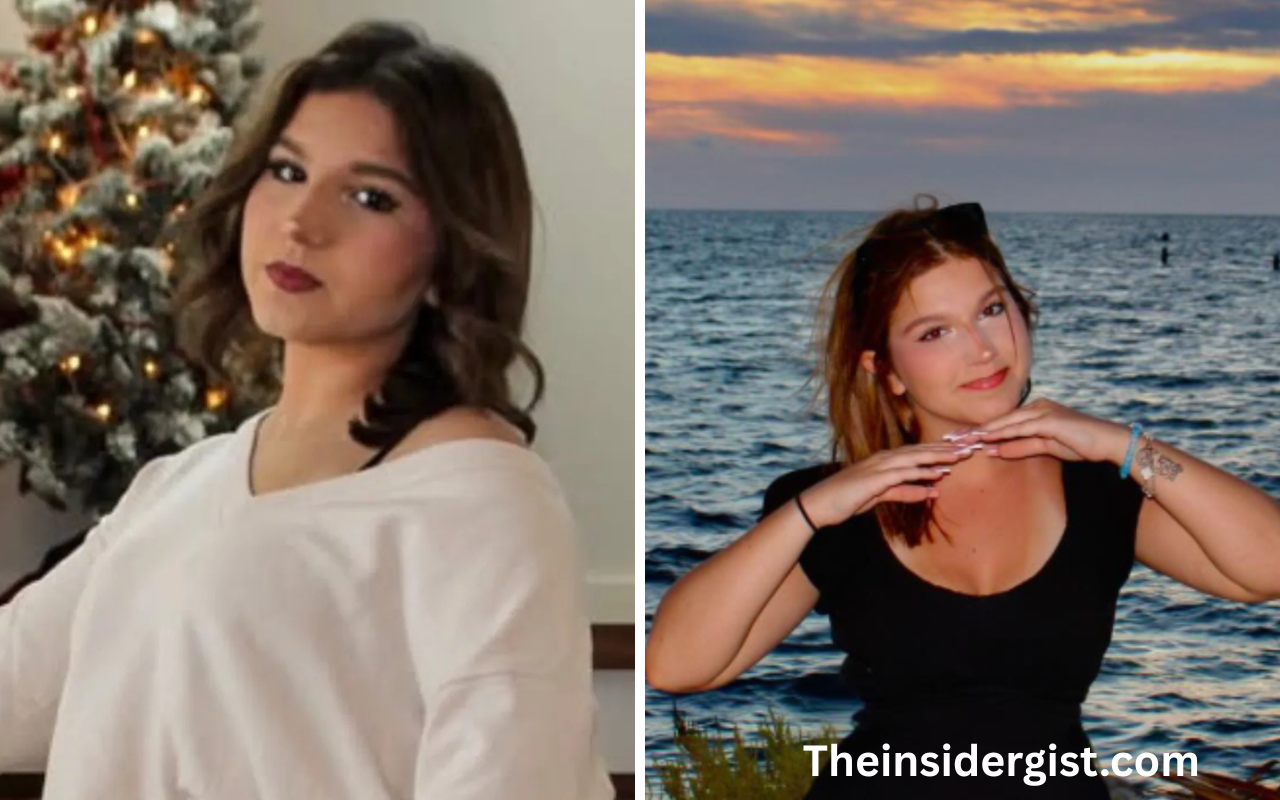
Leah Palmirotto was originally from Florida, though she spent time in Georgia as well. Those who knew her describe a young woman who radiated energy and kindness. She had two great loves in her life that defined her personality. The first was cars. She spent countless hours attending car shows, photographing vehicles, and immersing herself in automotive culture. The second love was photography, specifically the niche art of urban exploration. Urban exploration involves entering abandoned or off limits man made structures to document their current state. It is a hobby that requires courage, creativity, and a willingness to take calculated risks. Leah possessed all three qualities in abundance.
Her family and friends remember her as someone who got along with everyone she met. A fundraising page created in her memory painted a picture of a girl who could never sit still. She was always looking for the next adventure, the next beautiful ruin, the next striking image to capture with her camera. Her father, Todd Palmirotto, spoke publicly about his devastation after her death. He expressed the painful hope that her fall was instantaneous so that she did not experience prolonged suffering. He described the difficulty of explaining to other family members that Leah was simply gone, without warning and without a chance to say goodbye. The family launched a GoFundMe campaign to cover funeral expenses, and the community responded with overwhelming generosity, a testament to how many lives Leah had touched.
Beyond the headlines and the tragic circumstances of her death, it is essential to remember that Leah Palmirotto was a real human being with dreams and plans. She was not a cautionary tale first and a person second. She was a daughter to grieving parents, a sister to two brothers, and a loyal friend to many. Her passion for photography was not a flaw. It was a gift that allowed her to see beauty where others saw only decay. The tragedy is not that she loved abandoned buildings. The tragedy is that one of those buildings, a structure made famous by a television show, proved to be far more dangerous than she ever could have anticipated. Her story deserves to be told with compassion, not sensationalism.
Why the Hawkins Lab Filming Location Is So Dangerous
The building that serves as Hawkins National Laboratory in Stranger Things has a long and troubled history that predates the show by decades. It was originally constructed as the Georgia Mental Health Institute. For many years, it functioned as a working psychiatric hospital before eventually being closed down and left vacant. Emory University now owns the sprawling Briarcliff campus, but the old mental hospital building remains largely untouched. Years of neglect have taken a severe toll on its structural integrity. Floors that were once solid have rotted or weakened. Railings on staircases and upper levels have rusted away or been removed by vandals. Windows are broken, leaving the interior exposed to rain, wind, and mold growth.
For the production of Stranger Things, the building was partially stabilized and made safe for cast and crew. Lighting rigs, temporary flooring, and safety equipment were installed specifically for filming. However, once filming wraps on a location, those safety measures are removed. The building returns to its natural state as an abandoned, unstable structure. This is a critical detail that many fans overlook. They see the polished, moody images of Hawkins Lab on their television screens and assume the real location is similarly maintained. It is not. The real building is filled with hazards that are invisible to the untrained eye. A floor that looks solid might collapse under a person’s weight. A railing that appears intact might snap at the lightest touch. A dark corridor might hide a sudden drop.
Leah Palmirotto entered this environment in the early morning hours. Darkness amplified every existing danger. Without proper lighting, safety gear, or knowledge of which areas had been compromised, she was walking through a minefield of structural failures. The fall that killed her likely happened because she stepped onto a section of flooring that could not support her or because she lost her balance near an unguarded edge. These are not rare occurrences in abandoned buildings. Statistically, falls are the leading cause of death among urban explorers. The Hawkins Lab location, with its multiple stories and decaying infrastructure, represents one of the most dangerous filming locations still standing from the entire Stranger Things series.
The Exact Night of the Accident and Emergency Response
The tragic incident occurred in the early morning hours of December nineteenth, two thousand twenty five. According to police reports and local news coverage from outlets such as Fox five Atlanta, Leah Palmirotto was accompanied by a small group of friends. The group decided to climb over the fencing that surrounds the Briarcliff campus, ignoring the multiple no trespassing signs posted at regular intervals. These signs are not merely suggestions. They are legal warnings backed by the reality that the property is uninsured for public access and has been documented as structurally unsound. The group’s motivation appears to have been a combination of thrill seeking and artistic desire. Leah, in particular, wanted to photograph the location that had become so famous through Stranger Things.
At approximately one thirty in the morning, emergency dispatchers received a frantic call reporting that someone had fallen. Police officers and paramedics rushed to the scene. When they arrived, they found Leah Palmirotto lying at the base of the building. She had plummeted from an upper level. The exact height of the fall has not been officially confirmed by investigators, but witnesses familiar with the building’s layout estimate it was at least thirty to forty feet. Emergency medical technicians provided immediate care at the scene before transporting her to a nearby Atlanta hospital. Despite their best efforts and the speed of the response, doctors were unable to save her. She was pronounced dead shortly after arrival. The official cause of death was determined to be blunt force trauma consistent with a high elevation fall.
The friends who were with Leah were understandably traumatized by witnessing the accident. Law enforcement questioned them extensively to determine whether any factors beyond the fall itself contributed to her death. No evidence of foul play was found. The incident was ruled a tragic accident resulting from unsafe conditions and unauthorized entry. The investigation did reveal that the group had climbed to a section of the building that had been specifically flagged by previous security assessments as high risk. Whether Leah lost her footing on loose debris or a section of floor gave way beneath her remains unclear. What is clear is that no amount of emergency response could have changed the outcome once gravity took over.
How Social Media Confused Fans About Stranger Things Season Five
In the hours and days following the accident, social media platforms became breeding grounds for misinformation. TikTok, Reddit, and Twitter saw a surge of posts linking Leah Palmirotto directly to Stranger Things Season five. Some users claimed she was a background actress who had been killed in a freak accident on set. Others speculated wildly that her death was somehow a marketing stunt or a hidden clue about the final season’s plot. A few accounts went so far as to create fake IMDb pages listing her as a cast member. These posts gained thousands of likes and shares before fact checkers could intervene. The speed of misinformation on social media far outpaced the speed of official reporting.
Several factors contributed to this confusion. First, Stranger Things Season five was under an intense media lockdown regarding plot details. Netflix and the Duffer Brothers had gone to great lengths to prevent spoilers about Vecna, Eleven, Max, and the fate of Hawkins. In that vacuum of official information, any new name attached to the show seemed plausible to casual fans. Second, the phrase died at Hawkins Lab triggers immediate associations with the fictional dangers of the Upside Down. Human psychology tends to seek narratives that make sense within existing frameworks. It was easier for some internet users to imagine Leah as a victim of the show’s fictional horror than to accept the mundane, heartbreaking reality of a young woman who fell off a building.
Fact checking organizations and reputable entertainment news sites eventually stepped in to correct the record. They confirmed that Leah Palmirotto had no professional affiliation with Stranger Things whatsoever. She never signed a contract with Netflix. She never appeared on a call sheet. She never met Millie Bobby Brown or David Harbour. Her connection to the show was purely geographical and coincidental. The confusion caused additional pain for her family, who had to watch the internet turn their daughter’s death into a bizarre conspiracy theory. Todd Palmirotto issued a quiet plea for accuracy and respect, asking people to stop spreading false information about Leah’s involvement with the series. She was a young woman who loved photography, not a character in a sci fi horror show.
The Official Statements From Emory University and Police
Following the incident, Emory University released a formal statement expressing condolences to the Palmirotto family. The statement reiterated that the Briarcliff campus, including the former Georgia Mental Health Institute building, is private property and strictly off limits to unauthorized personnel. The university emphasized that multiple layers of fencing, signage, and periodic security patrols are already in place to deter trespassers. However, the statement also acknowledged that no amount of physical barriers can stop a determined individual from entering a property if they are willing to climb fences and ignore warnings. Emory officials used the tragedy to reinforce that abandoned buildings are not safe for exploration, regardless of how famous they have become.
The local police department also issued comments about the ongoing investigation. While the case was ruled an accident, investigators continued to examine whether any specific structural failure contributed to Leah’s fall. This distinction matters for liability purposes. If a particular floor or railing collapsed due to negligence on the part of the property owner, that could open the door to legal action. However, early indications suggested that the building’s deteriorated condition was well documented and that Leah and her friends were aware they were entering at their own risk. No charges were filed against the friends who accompanied her, as there was no evidence of coercion or reckless behavior beyond the initial decision to trespass.
The police also took the opportunity to warn the public about the rising trend of visiting Stranger Things filming locations. They noted that officers had responded to multiple incidents of fans being injured, lost, or confronted by security at the Briarcliff campus before Leah’s death. Some of those previous incidents involved minor injuries like twisted ankles or cuts from broken glass. Others involved fans getting stuck in locked sections of the building and requiring rescue. Leah Palmirotto’s case was the first fatality, and law enforcement hoped it would serve as a wake up call for other fans tempted to follow in her footsteps. The message from both the university and the police was the same. Stay away. No photograph is worth dying for.
Urban Exploration Risks Every Photographer Must Know
Leah Palmirotto was an experienced urban explorer. She had successfully photographed numerous abandoned buildings before entering the Hawkins Lab location. Experience, however, does not guarantee safety. The nature of urban exploration is that every building presents unique hazards. Some structures have asbestos or black mold that can cause long term respiratory damage. Others have unstable foundations that can shift without warning. Some are home to aggressive animals, homeless individuals, or criminal activity. The most common and deadly hazard, as in Leah’s case, is height. Buildings with multiple stories offer dramatic photo opportunities, but they also offer dramatic consequences if a step is misplaced.
Urban photography experts have long advocated for a set of safety protocols that Leah may not have followed on the night of her death. The first rule is never explore alone. Leah had friends with her, which is good. The second rule is never explore in darkness without professional lighting. The accident happened at one thirty in the morning. Darkness hides cracks in flooring, missing railings, and sudden changes in elevation. A flashlight or headlamp is not sufficient for navigating a multi story abandoned building. Professional urban explorers use high powered floodlights and often scout locations during daylight hours before returning at night. The third and most important rule is to know when to turn back. If a stairwell is dark, if a floor feels spongy, if a railing wobbles, the correct decision is to abandon the mission.
Leah’s death has prompted renewed discussion within the urban exploration community about the ethics of documenting dangerous locations. Some photographers argue that the risk is part of the art and that no one should be blamed for pursuing their passion. Others take a more cautious view, suggesting that no building famous from television or film is worth entering without explicit permission and professional safety equipment. The Hawkins Lab building has been on the urban exploration blacklist for years, with experienced photographers warning amateurs to stay away. Leah Palmirotto may not have seen those warnings. Or she may have seen them and believed that her skill would protect her. Ultimately, no amount of skill can overcome a sudden structural failure in a building that was never designed to be walked upon.
The Family’s Grief and the GoFundMe Memorial Fund
In the aftermath of the tragedy, Leah Palmirotto’s family faced not only emotional devastation but also financial pressure. Funeral costs, memorial services, and related expenses can run into the tens of thousands of dollars. To ease this burden, the family organized a GoFundMe campaign. The campaign page was written with raw honesty, describing Leah as a girl who loved the beach, cars, and exploring abandoned buildings. It asked donors to remember her smile and her enthusiasm rather than the manner of her death. The response was immediate and overwhelming. Thousands of strangers contributed, moved by the story of a young life cut short. The funds raised helped the Palmirotto family lay Leah to rest with dignity.
Todd Palmirotto, Leah’s father, spoke sparingly but powerfully to local media. He described the nightmare of receiving the phone call that every parent dreads. He talked about the empty chair at the dinner table and the Christmas holiday that would forever be associated with loss. He did not publicly blame the show Stranger Things or the property owners. Instead, he directed his energy toward grieving and protecting his family’s privacy. He also expressed gratitude to the first responders who tried to save his daughter and to the strangers who donated to the GoFundMe campaign. His grace under unimaginable pressure drew praise from community members who saw a father handling tragedy with remarkable strength.
A memorial service was held at Kennesaw Park, a location that held special meaning for Leah and her friends. Attendees shared stories about her talent behind the camera and her ability to make anyone feel welcome. Some brought printed copies of her photographs, showcasing the beauty she had found in forgotten places. Others wore car themed clothing in honor of her love for automotive culture. The service was not a public spectacle. It was a private gathering of hearts broken by a loss that should not have happened. Leah Palmirotto was laid to rest with her camera placed beside her, a final tribute to the passion that defined her life and, tragically, contributed to her death.
Read More: Is Diddy Out of Jail? What the April 2026 Appeal Really Means
What Stranger Things Fans Can Learn From This Tragedy
For the millions of people who love Stranger Things, the show represents escapism, nostalgia, and thrilling storytelling. The characters of Eleven, Mike, Dustin, and Lucas have become cultural touchstones. The settings of Hawkins Lab, the Starcourt Mall, and the Creel House are as memorable as any character. However, fans must remember that these are filming locations, not theme parks. They are not maintained for public safety between shooting schedules. The Duffer Brothers and Netflix have no responsibility for what happens to fans who trespass on private property years after filming has ended. The responsibility rests entirely with the individual who decides to climb a fence and ignore a warning sign.
There are safe ways to engage with Stranger Things locations. Several tours operate in and around Atlanta that take fans to publicly accessible sites mentioned in the show. These tours are led by guides who know which areas are safe and which areas are restricted. Fans can also watch behind the scenes documentaries that show how the Hawkins Lab sets were constructed on soundstages or on location under controlled conditions. Social media is filled with photographs taken by fans who visited the Briarcliff campus from a distance, using telephoto lenses to capture the building without ever setting foot on restricted property. These photographers get the shot and go home alive at the end of the day.
Leah Palmirotto’s death is a lesson that no fan should have to learn through personal experience. Her name will forever be linked to Stranger Things in the worst possible way. But that link can serve a positive purpose if it saves even one life. Before approaching any filming location, ask yourself a simple question. Is this photograph worth leaving my family without a daughter, a son, a mother, or a father? The answer is always no. The building will still be there tomorrow. The show will still be on Netflix. But you might not be there if you take an unnecessary risk. Leah Palmirotto did not wake up on December nineteenth expecting to die. She expected to take some beautiful photographs and go home. That is what makes her story so haunting and so essential to share.