




The Secret Scene That Destroyed Marty Hart: Alexandra Daddario True Detective Confession
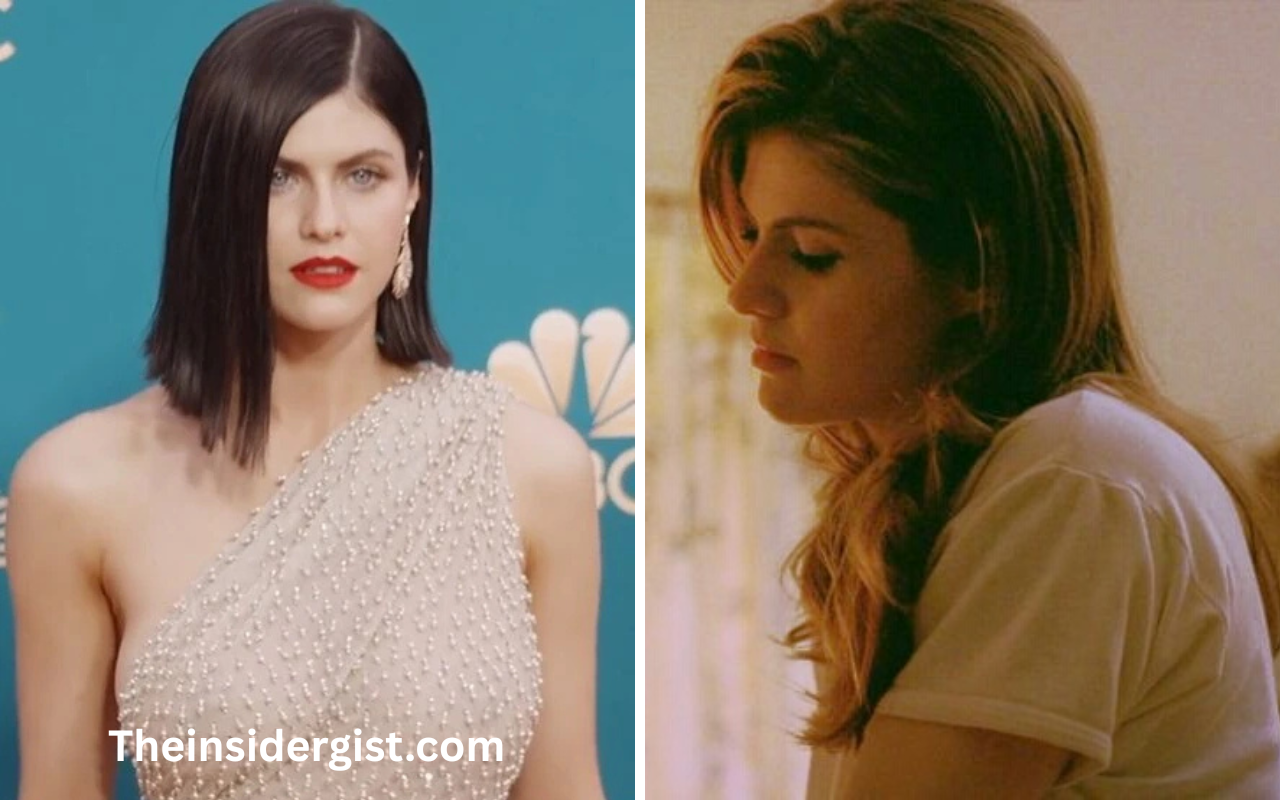
When casting directors first brought alexandra daddario true detective into the fold for True Detective, few understood just how explosive her presence would become. Daddario was twenty-seven years old at the time of filming, still largely known for her work as Annabeth Chase in the Percy Jackson films, a role that required athleticism and youthful charm rather than raw psychological intensity. The leap from young adult fantasy to the grim, philosophical horror of Louisiana’s bayou country felt jarring on paper, yet that very contrast became the secret weapon of her performance. Showrunner Nic Pizzolatto has rarely spoken about the specifics of Lisa Tragnetti’s casting, but insiders suggest that Daddario’s audition showcased a willingness to embrace discomfort, a quality essential for a character designed to unravel a man’s entire domestic life.
The production team knew they needed an actress who could hold her own against Woody Harrelson without flinching. Harrelson, known for his intense improvisational style and raw emotional availability, can overwhelm less experienced scene partners. Daddario, however, walked onto the set with a quiet confidence that immediately silenced any skepticism. She understood that Lisa was not merely a plot device for Marty Hart’s infidelity but rather a mirror reflecting every lie the detective told himself. During early rehearsals, Daddario reportedly pushed back against lines that painted Lisa as desperate or clingy, insisting that her character would never beg for Marty’s attention. That assertive energy ultimately reshaped the script, turning what could have been a passive mistress into a woman who controlled every room she entered.
Viewers who revisit those early episodes with fresh eyes notice something remarkable about Daddario’s physicality. She stands straight, makes unblinking eye contact, and never allows Marty to touch her without her explicit permission. In a show filled with broken women and victimized bodies, Lisa Tragnetti remains curiously untouched by the tragedy surrounding her. She leaves the affair not because she is caught or hurt, but because she simply grows bored with Marty’s limitations. This subtle yet devastating character choice elevated Daddario from a guest star to a cultural talking point, proving that even a handful of scenes could launch a thousand think pieces.
Why The Handcuff Scene Was Never Meant To Go Viral According To The Director
Director Cary Fukunaga approached the filming of episode two with a very specific artistic vision that had nothing to do with creating viral internet moments. He wanted the intimacy between Marty and Lisa to feel uncomfortable, not erotic, emphasizing the transactional nature of their connection. The now-legendary handcuff prop was actually Harrelson’s idea, a spontaneous addition meant to underscore Marty’s dangerous flirtation with losing control. When Daddario agreed to the prop, she understood that the handcuffs symbolized Marty’s self-imprisonment, his desperate need to feel powerful in a world where his job constantly reminded him of human fragility. The scene was shot in a single afternoon with minimal crew, and Fukunaga later admitted in interviews that he had no idea the sequence would dominate social media for years.
The immediate aftermath of the episode’s airing caught everyone off guard, including the network executives at HBO. Within twelve hours of broadcast, Alexandra Daddario became the number one trending topic on Twitter, a feat virtually unheard of for a supporting actress in a drama series. Suddenly, every entertainment outlet wanted to know who this blue-eyed woman was and why she had seemingly appeared from nowhere. Daddario has since described waking up to hundreds of text messages and voicemails, many from friends who had no idea she was even working on the project. The virality of the scene created a strange disconnect for the actress, who had poured genuine emotional labor into a moment now being reduced to animated GIFs and late-night joke segments.
Perhaps most surprisingly, the scene achieved something that nudity in prestige television rarely accomplishes; it made audiences genuinely uncomfortable with Marty rather than objectifying Lisa. Critical analysis of the sequence reveals that the camera lingers on Harrelson’s bewildered expression far longer than on Daddario’s body, emphasizing his loss of authority. This directorial choice shifted the power dynamic entirely, turning a potential exploitation moment into a study of male vulnerability. Daddario has expressed gratitude for Fukunaga’s protection during filming, noting that he consistently checked on her comfort levels and adjusted lighting to ensure she never felt exposed beyond what the story required. The viral aftermath, while overwhelming, ultimately served as proof that her gamble on mature content had paid off spectacularly.
Alexandra Daddario’s Raw Interview Confessions About Feeling Unnerved On Set
In a candid 2021 interview with The Guardian, Alexandra Daddario opened up about the anxiety that plagued her during the True Detective shoot, an admission that humanized the scene for many critics. She confessed to feeling “unnerved” walking onto the set each morning, knowing that millions of viewers would eventually dissect her performance frame by frame. The young actress had never filmed anything requiring nudity before, and the pressure to appear flawless while conveying deep emotional turmoil created a paradox that kept her awake at night. She relied heavily on breathing techniques learned from theater training, focusing on the character’s internal logic rather than the mechanics of blocking and lighting. Daddario also credited her mother, who visited the set during filming, with providing grounding conversations that reminded her why she became an actress in the first place.
The actress has repeatedly emphasized that Woody Harrelson’s professionalism made an uncomfortable situation bearable. Harrelson, she explained, treated the explicit scenes with the same casual efficiency as a dialogue-heavy courtroom sequence, never making her feel ashamed or embarrassed about the physical demands of the role. He would joke between takes, offering her sips of tea and asking about her weekend plans, normalizing an environment that could have easily turned tense or predatory. Daddario noted that Harrelson’s wife also visited the set frequently, further reinforcing that the production was a professional, family-oriented space despite the adult content. This support system allowed Daddario to access genuine vulnerability during the takes, which translated on screen as raw honesty rather than performative sexuality.
Perhaps most revealing was Daddario’s admission that she almost turned down the role entirely. Her agents had warned her that nudity could typecast her or, worse, alienate the young fanbase she had cultivated through the Percy Jackson franchise. But a conversation with a trusted mentor convinced her that playing safe would never produce great art. She decided that if she was going to take the risk, she would commit fully, advocating for Lisa’s agency in every script meeting and rehearsal. Looking back, Daddario says she has no regrets, though she occasionally feels frustrated that interviewers still focus predominantly on her physical appearance rather than the character’s psychological complexity. That frustration, however, has fueled her determination to seek out roles that challenge perceptions, from the anxious bride in The White Lotus to the supernatural doctor in Mayfair Witches.
How Lisa Tragnetti Exposed The Hypocrisy Of Detective Marty Hart
Marty Hart enters True Detective as the audience’s entry point into normalcy, a counterbalance to Rust Cohle’s existential nihilism. He has a wife, two daughters, a house in the suburbs, and a golf hobby that screams respectable middle age. Yet Lisa Tragnetti functions as the narrative scalpel that slices through this carefully constructed facade, revealing the rot beneath. Every interaction between Marty and Lisa exposes his profound narcissism; he wants her available when he desires but absent when inconvenient, a contradiction Lisa refuses to tolerate. When she ends the affair by telling him flatly that she is seeing someone else, Marty’s reaction is not heartbreak but wounded pride, proving that he valued ownership far more than intimacy. Daddario plays this dismissal scene with chilling calmness, her voice never rising above conversational volume as she dismantles his ego sentence by sentence.
The affair’s destruction reaches far beyond Marty’s marriage, ultimately costing him his career and his partner’s trust. When his wife Maggie discovers the truth and confronts him, Marty scrambles to blame Lisa, claiming she pursued him relentlessly. The show invites us to see this lie for what it is, a desperate man refusing accountability. Daddario’s Lisa, notably, never appears again after the breakup, vanishing from the narrative entirely, a deliberate choice by the writers to emphasize that she was never the story’s focus. Her absence speaks louder than her presence, leaving Marty to grapple with consequences he cannot escape. Without Lisa as a scapegoat, he must finally look inward, a journey that takes him nearly a decade and costs him almost everything he claims to value.
Interestingly, many feminist critics have praised the show’s handling of Lisa’s exit precisely because she is not punished. In lesser television dramas, the other woman dies, gets assaulted, or suffers a dramatic comeuppance that restores moral order. Lisa simply walks away, unbothered, moving on to a new relationship and presumably a happier life. This lack of punishment infuriated some traditionalist viewers who expected karmic retribution, but it delighted those tired of seeing female sexuality treated as a crime. Daddario has noted that this ambiguity was intentional, that Pizzolatto wanted to avoid easy moralizing. By allowing Lisa to escape unscathed, True Detective subtly argued that the sin was not infidelity but the hypocrisy and possessiveness that Marty brought to every relationship, romantic or professional.
The Career Explosion That Followed True Detective According To Box Office Numbers
The raw data tells a compelling story about the Alexandra Daddario effect following her True Detective appearance. In the eighteen months after the show aired, her IMDb page logged over forty new project announcements, ranging from independent dramas to major studio franchises. The most immediate and lucrative result was her casting in San Andreas, a Warner Bros. disaster epic opposite Dwayne Johnson, which ultimately grossed over four hundred seventy million dollars worldwide. Casting director Denise Chamian later confirmed in an industry podcast that Daddario’s True Detective footage was the sole reason she received an audition, noting that Chamian needed an actress who could convey toughness and vulnerability simultaneously. Daddario’s performance in the film as a survivalist daughter showcased the range that HBO viewers had glimpsed only briefly, earning her positive reviews from critics who had previously dismissed her as lightweight.
The box office success of San Andreas opened doors that had remained firmly shut during her Percy Jackson years. Suddenly, offers arrived from prestige directors like Paul Thomas Anderson and television showrunners like Mike White. Daddario strategically balanced franchise work with independent films, appearing in the critically acclaimed The Choice and the horror hit Texas Chainsaw 3D. Each role built upon the foundation laid by Lisa Tragnetti, proving that audiences would follow her into dark, complex territory. Agents and managers in Hollywood quietly began using Daddario as a case study for how a single supporting performance could transform a career trajectory, particularly for actresses stuck in the young adult genre ghetto.
Perhaps most telling is the longevity of her post-True Detective relevance. Unlike many actors who spike in popularity after a controversial role only to fade quickly, Daddario has maintained steady employment in high-profile projects for nearly a decade. Her transition to lead status in Mayfair Witches for AMC represents the culmination of this long game, giving her creative control over a supernatural franchise with built-in audience loyalty. When asked about the secret to her staying power, Daddario credits the hard lessons learned on the True Detective set, specifically the importance of advocating for her characters and never playing victimhood unless the script genuinely earns it. That professional maturity, honed in the pressure cooker of HBO’s most talked-about season, continues to pay dividends with every new project announcement.
Read More: Rose Bundy Net Worth: The Hidden Finances of Ted Bundy’s Daughter
Why Alexandra Daddario Defends The Role Against Misogyny Accusations
In the years following True Detective’s release, several prominent feminist publications accused the show of exploiting female nudity for male artistic gratification. Alexandra Daddario found herself frequently asked to respond to these critiques during press tours for unrelated projects, a responsibility she never anticipated when accepting the role. Her defense of the show has remained consistent and passionate; she argues that context matters immensely, and that Lisa’s nudity serves a specific narrative function rather than existing solely for titillation. Daddario points out that the show features equal opportunity nudity, with Woody Harrelson and Matthew McConaughey also appearing unclothed at various points, suggesting a director committed to realism rather than exploitation. She has also noted that her character never loses her voice or agency, even in the most physically vulnerable moments.
The actress draws a sharp distinction between True Detective and genuinely exploitative projects she has been offered since. She reveals in interviews that following her HBO exposure, several low-budget productions approached her with scripts featuring gratuitous nudity that added nothing to story or character development. Those offers she rejected outright, often without even finishing the screenplay. Daddario credits her True Detective experience with giving her the discernment to recognize the difference between artistic necessity and lazy provocation. When a script uses nudity to explore power dynamics, vulnerability, or character contradiction, she remains willing to consider it. When nudity appears simply to wake up the audience or to compensate for weak writing, she walks away without hesitation.
This nuanced position has earned Daddario respect from both feminist critics and industry traditionalists, a rare middle ground in an often polarized conversation. She has become an unofficial spokesperson for actresses navigating similar career decisions, frequently mentoring younger performers who feel pressured to accept explicit roles against their instincts. Her advice is simple but powerful; ask yourself whether the character would exist exactly the same way if the nudity were removed. If the answer is no, the role may be exploitative. If the answer is yes, the physical vulnerability may be worth the artistic risk. By sharing this framework publicly, Daddario has transformed her own complicated experience into a tool for others, ensuring that the conversation around her True Detective role continues to evolve beyond tabloid headlines.
The Lasting Cultural Impact Of Lisa Tragnetti On Prestige Television
Ten years after its initial broadcast, True Detective Season 1 remains a benchmark for anthological