




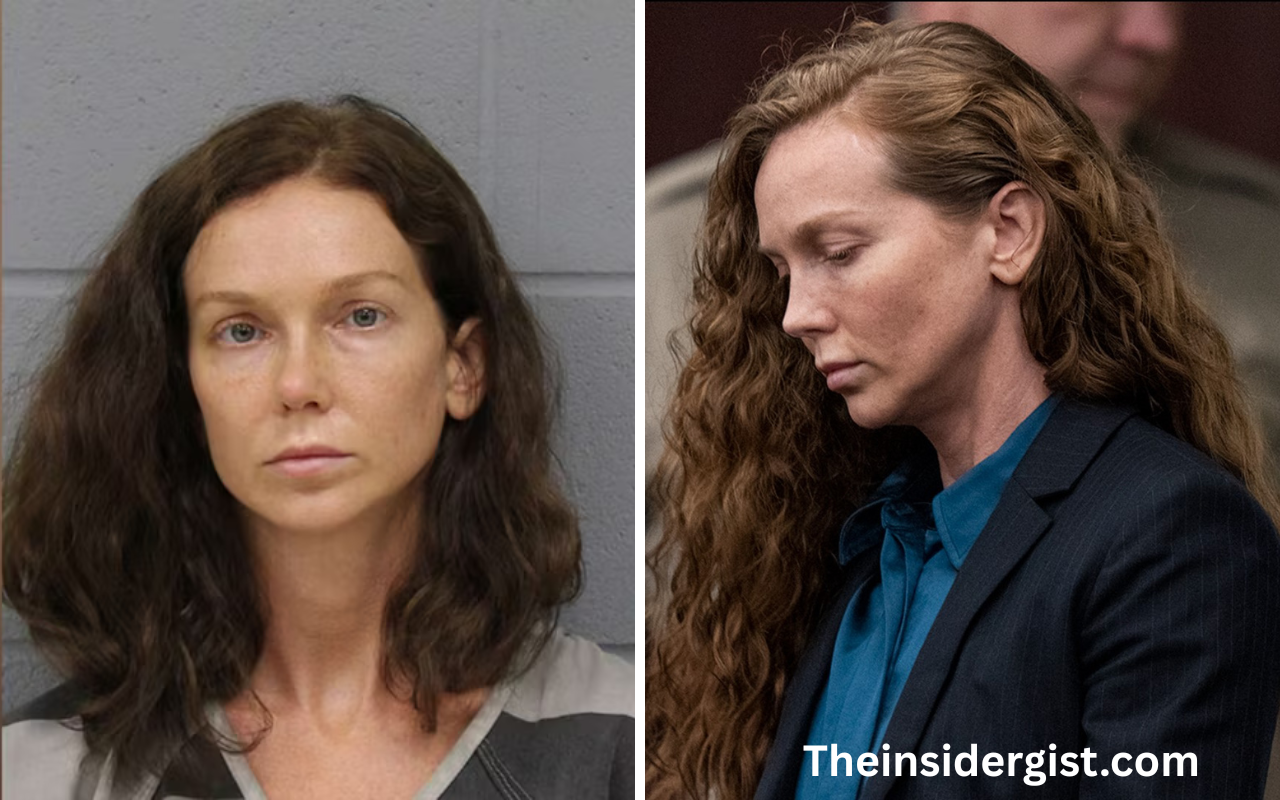
The Kaitlin Armstrong Story: Jealousy, Flight, and a Life Sentence for Murder
The Rise of Kaitlin Armstrong Before the Tragedy
Kaitlin Armstrong grew up in a seemingly ordinary American household, splitting her time between Michigan and Texas. She was known in her community as a dedicated athlete, spending countless hours on the soccer field before eventually transitioning into the world of yoga. Her friends and acquaintances described her as driven, health conscious, and someone who carried a quiet intensity beneath her calm exterior. She worked as a real estate agent and later managed finances for professional cyclists, a career path that would eventually introduce her to the world of competitive racing and to the man who would change her life forever.
By her late twenties, Armstrong had established a reputation as a skilled yoga instructor in Austin, Texas. She taught classes that focused on balance and inner peace, yet those who knew her well noticed a possessive streak when it came to her romantic relationships. Her family viewed her as ambitious, but there were early warning signs of jealousy that seemed harmless at the time. Armstrong had a habit of monitoring her partners’ social media activities and questioning their friendships with other women, behaviors that would later take on a sinister meaning following the murder of Anna Moriah Wilson.
The public image of Kaitlin Armstrong as a grounded wellness professional crumbled completely once investigators began piecing together her digital footprint. She had cultivated a polished online presence, posting serene yoga poses and motivational quotes about letting go of negativity. However, behind that curated image lay a woman who struggled with what prosecutors would call an obsessive need for control. Her background in finance gave her the analytical skills to track people’s movements digitally, and her physical training gave her the endurance to follow through on a violent plan. These contradictions made her one of the most fascinating and terrifying defendants in recent true crime history.
The Volatile Love Triangle Involving Colin Strickland
Colin Strickland was a celebrated figure in the gravel cycling scene, known for his daring races and his free spirited lifestyle. When he met Kaitlin Armstrong through a dating app, the two bonded over their shared love of fitness and adventure. Their relationship moved quickly, with Armstrong eventually managing Strickland’s finances and helping him navigate the business side of professional cycling. However, their romance was far from stable, marked by frequent arguments, temporary breakups, and reconciliations that left both parties emotionally exhausted. Strickland later admitted in court that he doubted their long term compatibility but continued the relationship out of comfort and convenience.
The introduction of Anna Moriah Wilson into this dynamic happened during a brief separation between Armstrong and Strickland. Wilson was a rising star in the cycling world, beloved for her infectious smile and her incredible endurance on rugged terrain. She and Strickland shared a brief romantic fling in October 2021, but the emotional connection persisted even after Strickland reconciled with Armstrong. Wilson was unaware of the depth of Armstrong’s jealousy, viewing her interactions with Strickland as purely platonic after their short romantic chapter had closed. Unfortunately, Armstrong viewed Wilson as a direct threat to her future with Strickland, a perception that would soon become deadly.
Strickland himself contributed to the toxic atmosphere by hiding his continued friendship with Wilson. He saved Wilson’s contact information under a false name in his phone, referring to her as Christine Wall to avoid triggering Armstrong’s suspicions. He also deleted text conversations with Wilson, a move that prosecutors argued demonstrated his awareness of Armstrong’s volatile nature. This secrecy, rather than protecting anyone, only deepened Armstrong’s paranoia when she eventually discovered the truth. The love triangle was not merely a matter of romantic jealousy; it was a powder keg of deception, insecurity, and obsession that was waiting for a spark.
The Final Hours of Anna Moriah Wilson in Austin
May 11, 2022, began as an ordinary day for Moriah Wilson, who had traveled to Austin to compete in the Gravel Locos race. She was staying at a friend’s apartment on Maple Avenue, looking forward to a night of rest before her competition. Wilson was known for her kindness and her ability to make friends wherever she went, and her visit to Austin was meant to be a celebration of her athletic achievements. She had no idea that she was being watched or that her every move was being tracked by a woman who saw her as an obstacle to be removed. The warm Texas evening seemed peaceful, but darkness was gathering in the form of a black Jeep Cherokee.
Colin Strickland picked Wilson up that evening for a casual outing that included swimming at Deep Eddy pool and dinner at a local restaurant called Pool Burger. Surveillance cameras captured the two laughing together on the back of Strickland’s motorcycle, images that would later be shown to a jury as evidence of the innocent friendship that Armstrong could not tolerate. What Strickland did not know was that Kaitlin Armstrong had turned off her cell phone at 7:30 PM that evening, a deliberate act to avoid leaving an electronic trail. Her Jeep’s GPS, however, continued to record its movements, and those records would tell a damning story.
At approximately 8:36 PM, Strickland dropped Wilson off at the Maple Avenue apartment, gave her a brief farewell hug, and rode away. Less than one minute later, GPS data placed Armstrong’s Jeep in the alley directly behind that same apartment building. At 9:15 PM, a neighbor’s doorbell camera captured the sound of a woman screaming followed by three distinct gunshots. Wilson was found lying face down in a pool of blood, her body riddled with bullets. By the time police arrived, Armstrong’s Jeep was already heading back toward the home she shared with Strickland, suggesting a cold and calculated departure from the scene of a brutal killing.
The Digital Evidence That Secured the Conviction
Investigators quickly realized that solving Moriah Wilson’s murder would require diving deep into the digital lives of everyone involved. Kaitlin Armstrong had left a massive electronic footprint that contradicted her claims of innocence. Detectives discovered that she had used the Strava fitness app to track Wilson’s location, saving the cyclist’s profile and monitoring her workouts obsessively. She had also taken screenshots of Wilson’s social media posts and had conducted internet searches related to Wilson’s racing schedule. This was not random curiosity; this was stalking, and the evidence was stored right there on Armstrong’s iPhone for the world to see.
The GPS data from Armstrong’s Jeep was perhaps the most damning piece of technology introduced at trial. Transportation records showed the vehicle leaving the Armstrong Strickland residence, traveling directly to the Maple Avenue neighborhood, and then lingering near the crime scene during the exact window when the murder occurred. The Jeep then returned home, with Armstrong later claiming she had been driving aimlessly because she could not sleep. No reasonable juror believed that explanation, especially when combined with the fact that Armstrong had deliberately turned off her cell phone to avoid real time tracking. She understood how digital evidence worked, and she tried to manipulate it, but the Jeep’s onboard GPS was not so easily silenced.
DNA evidence provided the physical link that technology could not. Wilson’s bicycle had been moved from the apartment’s front porch and discarded in some nearby bushes, a strange detail that suggested the killer had touched the bike. Forensic analysts swabbed the bicycle and found Kaitlin Armstrong’s DNA on the handlebars and frame. Armstrong had no legitimate reason to be near that bicycle or that apartment, yet her genetic material was present at the scene of a murder. When combined with the GPS data, the phone records, and the testimony of witnesses, the digital and physical evidence created a web of guilt from which Armstrong could not escape.
The International Manhunt and Plastic Surgery Transformation
After the murder, Austin police questioned Kaitlin Armstrong, but she remained calm and composed, showing none of the panic one might expect from a person of interest in a homicide investigation. She answered questions politely, denied any involvement, and walked free due to a clerical error on an unrelated arrest warrant. That mistake gave Armstrong a seventy two hour head start, and she used every minute of it to disappear. She sold her black Jeep for cash, withdrew money from multiple bank accounts, and drove to Houston where she boarded a flight to New York. From there, using her sister’s passport, she flew to San Jose, Costa Rica, beginning a forty three day journey as a fugitive.
Once in Costa Rica, Armstrong reinvented herself completely. She adopted the alias Ari Martin and rented a room in the beach town of Santa Teresa, a remote area known for surfing and yoga retreats. She dyed her distinctive red hair dark brown, cut it short, and began wearing oversized sunglasses to hide her face. But she did not stop there. Armstrong paid a local plastic surgeon approximately six thousand dollars for a rhinoplasty to reshape her nose, a brow lift, and lip fillers. She even wore bandages on her face for weeks, telling locals she had been in a surfing accident. The transformation was radical, but she could not change her eyes or the underlying structure of her face.
The United States Marshals Service refused to give up the hunt. They worked with Costa Rican authorities and followed a simple but effective strategy: they knew Armstrong could not stay away from yoga. The Marshals created a fake job posting for a yoga instructor position in Santa Teresa, knowing that the real Armstrong would be drawn to the opportunity. When a woman matching Armstrong’s description applied for the job, undercover officers approached her. Even with a bandaged nose and darker hair, the Marshals recognized her immediately by her eyes and her mannerisms. On June 29, 2022, Kaitlin Armstrong was arrested in Costa Rica and extradited back to Texas to face justice for the murder of Moriah Wilson.
The Trial and Dramatic Testimony That Shook the Courtroom
The murder trial of Kaitlin Armstrong began in November 2023, drawing intense media coverage from outlets around the world. Prosecutors laid out a methodical case built on three pillars: motive, opportunity, and forensic evidence. They showed the jury screenshots of Armstrong tracking Wilson online, played recordings of her asking Strickland about Wilson’s whereabouts, and presented the GPS data placing her Jeep at the scene. The prosecution also called a friend of the couple to the stand, who testified that Armstrong had once said, regarding Strickland dating other women, that she would kill her. That chilling statement echoed through the courtroom, giving the jury a glimpse into Armstrong’s violent mindset long before the murder actually occurred.
Colin Strickland took the stand as a witness, and his testimony was painful to watch. He admitted to hiding his friendship with Wilson, acknowledged that he had purchased two guns for himself and Armstrong, and broke down in tears when shown photos of Wilson’s body. The defense attempted to paint Strickland as a liar and a manipulator, arguing that he could have committed the murder himself or hired someone to do it. However, Strickland had a solid alibi for the night of the murder, and no evidence placed him at the Maple Avenue apartment. The defense’s attacks on Strickland’s character only seemed to confuse the jury, because the hard evidence still pointed directly at Armstrong.
The defense team argued that the case was purely circumstantial, noting that no eyewitness saw Armstrong pull the trigger and that the murder weapon was never found. They suggested that Armstrong’s DNA on the bicycle could have been transferred innocently, though they could not explain how or why. The jury deliberated for less than two hours before returning a verdict of guilty on the charge of first degree murder. The speed of the deliberation surprised even the most seasoned court observers. On November 16, 2023, Kaitlin Armstrong was convicted, and the following day, the judge sentenced her to ninety years in a Texas prison, with a ten thousand dollar fine. At the sentencing, Wilson’s mother read a victim impact statement that left no dry eye in the room, describing the hole her daughter’s death had left in the family.
Read More: Elizabeth Hurley Nude: The Shocking Truth About Her Youth, Her Millions, and Her Secret Loves
The Failed Escape Attempt and Life Inside Prison
Even before her trial began, Kaitlin Armstrong showed a willingness to take extreme risks to avoid confinement. In October 2023, while being transported from the jail to a medical appointment in South Austin, Armstrong managed to slip out of her restraints and flee on foot. She was wearing handcuffs and prison issue clothing, but she stripped off her pants to reveal thermal leggings underneath, hoping to blend in with civilians on the street. Correctional officers gave chase immediately, and a brief but intense foot pursuit ensued through a residential neighborhood. Armstrong was tackled and apprehended approximately half a mile from where she had escaped, adding an escape charge to her growing list of legal problems.
That escape attempt revealed a desperate woman who understood the gravity of her situation. While the escape charge was eventually dropped as part of plea negotiations, the incident became a key talking point for prosecutors who wanted to demonstrate Armstrong’s lack of remorse and